 Molly
Memory games for seniors: what to play, and what to expect
The best memory game for an older adult is one they enjoy and come back to: matching pairs, a sequence game like Simon, word lists, a crossword or a hand of cards with the family. Play for the fun and the company. No game has been shown to prevent dementia, whatever the ads say.
Six kinds of memory game
Pairs
Cards face down. Turn two at a time and find the matches.
Sequence games
Repeat the colours in order. One step longer each round.
Word lists
“I packed my suitcase”: repeat the list and add one thing.
Kim's game
Look at a tray of objects, cover it, take one away. What's gone?
Crosswords and sudoku
A puzzle a day from the paper or an app.
Card games
Rummy or whist: remember which cards have gone.
Games that work well
Start easier than you think. A game you win feels good and gets played again tomorrow; one you lose three times running goes back in the cupboard.
- Pairs. Lay 12 cards face down, turn two at a time and keep the ones that match. Add more cards once 12 feels easy.
- Sequence games. Colours light up in order and you repeat them, one step longer each round, as in Simon. A round takes under a minute.
- “I packed my suitcase”. Round the table, each person repeats the list so far and adds one thing. No equipment needed, and it soon gets funny.
- Kim's game. Put eight or ten objects on a tray, look for a minute, cover it and take one away. Which one is missing? Grandchildren love running this one.
- Crosswords, sudoku and word puzzles in the paper are a good daily habit for people who play alone.
- Card games like rummy or whist get you round the table with other people, keeping track of which cards have gone.
What makes a game easy to get into
On paper or on a screen, the same things decide whether a game gets played or forgotten:
What to look for
On a screen, a tablet helps too: everything is bigger than on a phone.
What the research says
Brain-training apps have promised a lot. In 2016 the company behind Lumosity agreed to pay $2 million to settle charges from the US Federal Trade Commission. The FTC said the company had claimed, without proper evidence, that its games could delay age-related decline and protect against dementia.
Two years earlier, the Stanford Center on Longevity and the Max Planck Institute for Human Development published a statement signed by a long list of scientists. There is little evidence that brain games improve broad thinking skills or help in everyday life, it said, and no study has shown that they prevent Alzheimer's or other dementia. Practice does make you better at the game you practise.
The same statement recommends a life that is physically active, mentally challenging and social. So choose games because you enjoy them, and play with other people when you can.
If forgetfulness is getting worse or worrying you, talk to a doctor. A game can't tell you what's behind it.
Sources: FTC, 5 January 2016 and Stanford Center on Longevity, 20 October 2014.
Playing across generations
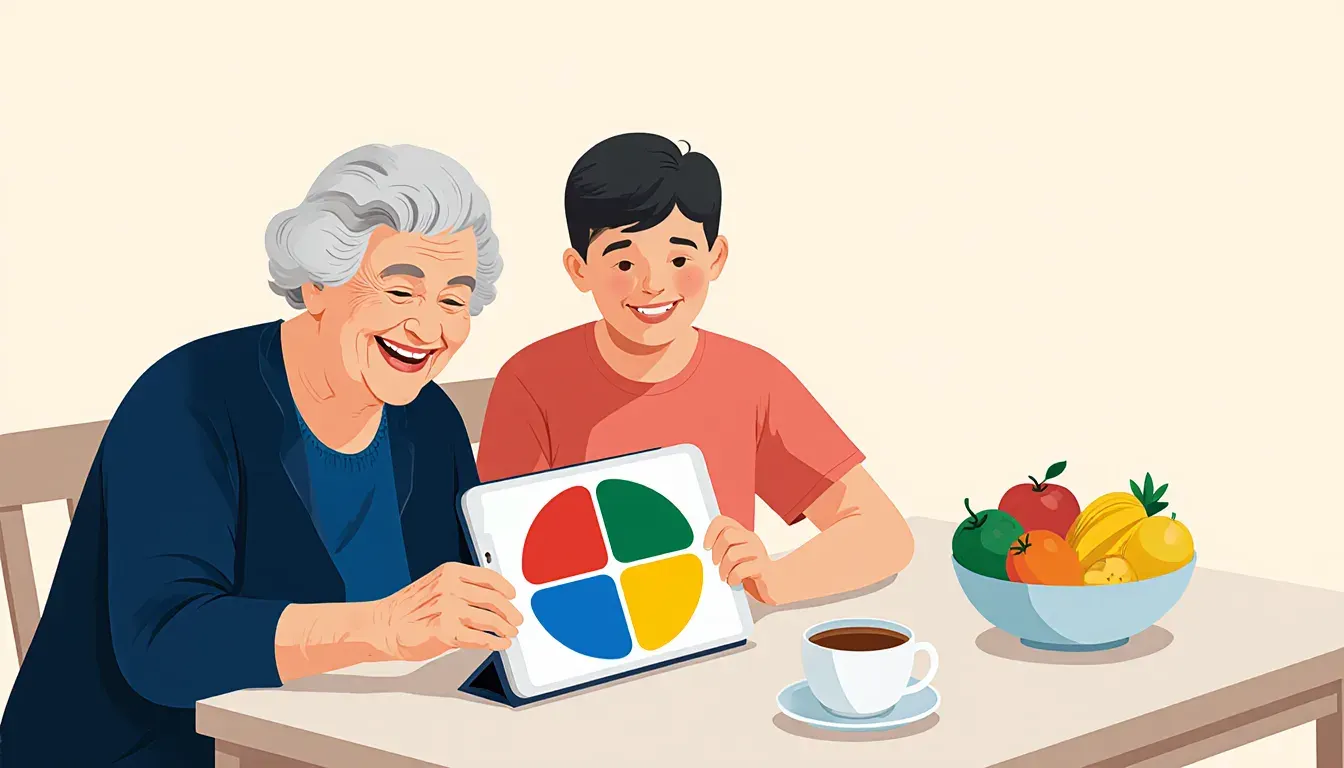
Memory games are one of the few things a grandparent and a seven-year-old can play on equal terms. Children are quick; grown-ups are patient. Take turns, keep a family best on the fridge, and let the youngest run the next round.
Molly on iPhone and iPad
I made Molly with this in mind. Four big colours in a ring, each with its own tone, and one more step every round. Relaxed gives you 7 seconds for each press. Turn on shapes on the colours (circle, triangle, square and diamond), and you never have to tell the colours apart. There are no ads and no account, and on an iPad the board fills the screen.
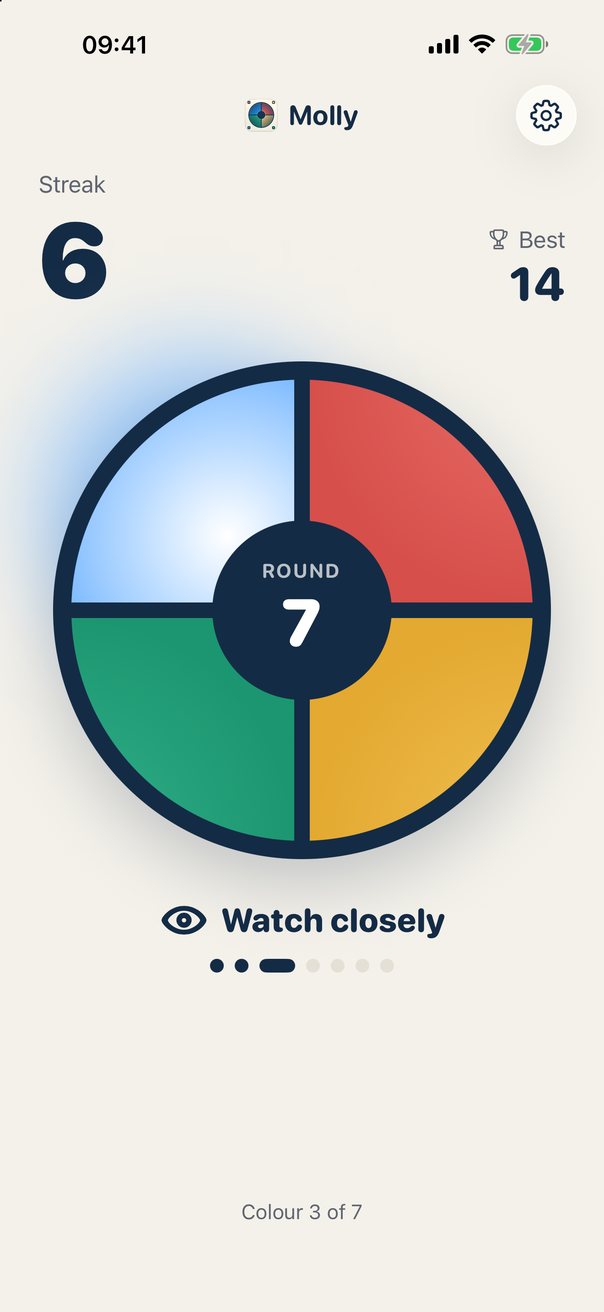 1Four big pads, one tone each2Colour 3 of 7
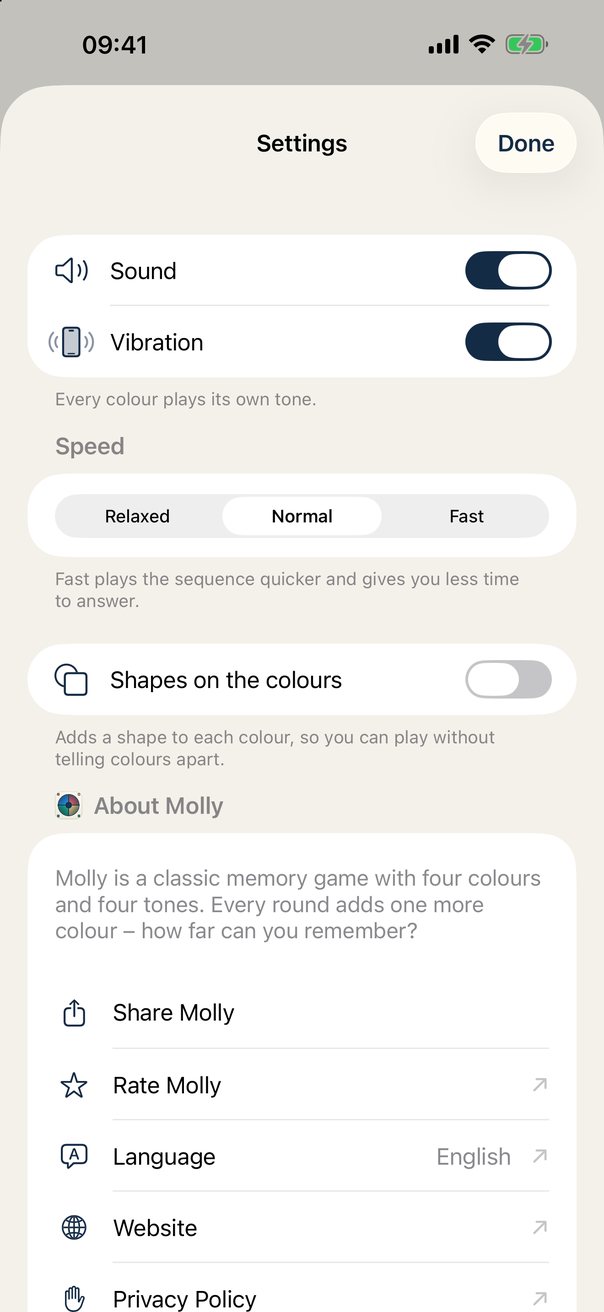 3Relaxed: 7 seconds per press4Shapes on the colours
- Four big pads, one tone each
- Colour 3 of 7
- Relaxed: 7 seconds per press
- Shapes on the colours
Molly costs $1.99, once, and everything is included.